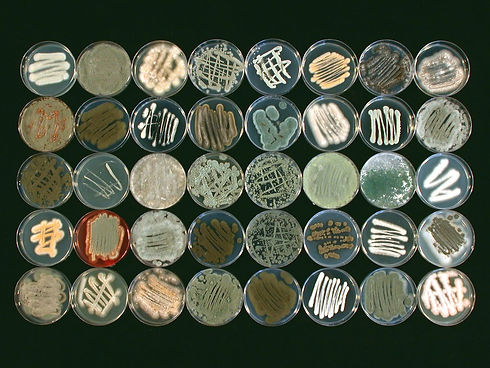
An initiative to celebrate and safeguard marine microbial diversity


our approach

Sample
Bioprospect marine ecosystems such as salt marshes, seagrass prairies and macroalgae forests

Isolate
Using a cultoromic approach to maximise the isolation of marine microbes present in our samples.

Characterize
Employ a biochemical pipeline to evaluate the metabolic traits of the isolates, coupled with state-of-the-art genomics to provide a clear identification of our cultures.

Catalogue
All microbes isolated are associated with a set of data regarding the environmental metadata, culturing conditions, as well as taxonomic and biochemical information.

Archive
Isolates are maintained cryopreserved and continuously screened for their viability.
About the marbiome biobank
Hosted at the Faculty of Sciences, University of Lisbon, and led by MARE – Marine and Environmental Sciences Centre and ARNET – Aquatic Research Network (LA), with the participation of cE3c - Centre for Ecology, Evolution and Environmental Changes and BioISI - Biosystems & Integrative Sciences Institute, this biobank will collect, preserve, and catalogue marine bacteria, fungi, and yeasts.
Why is this important?
The marine microbiome refers to the vast collective of organisms including viruses, bacteria, archaea, fungi, protists, and microalgae found throughout the world's oceans, forming the foundation of marine food webs and performing vital ecosystem services like producing oxygen, absorbing carbon dioxide, and cycling nutrients. This microbial life supports marine animals, contributes to global biogeochemical cycles, and serves as a source of valuable biomolecules for medicine and biotechnology – from sustainable materials to medical innovations.